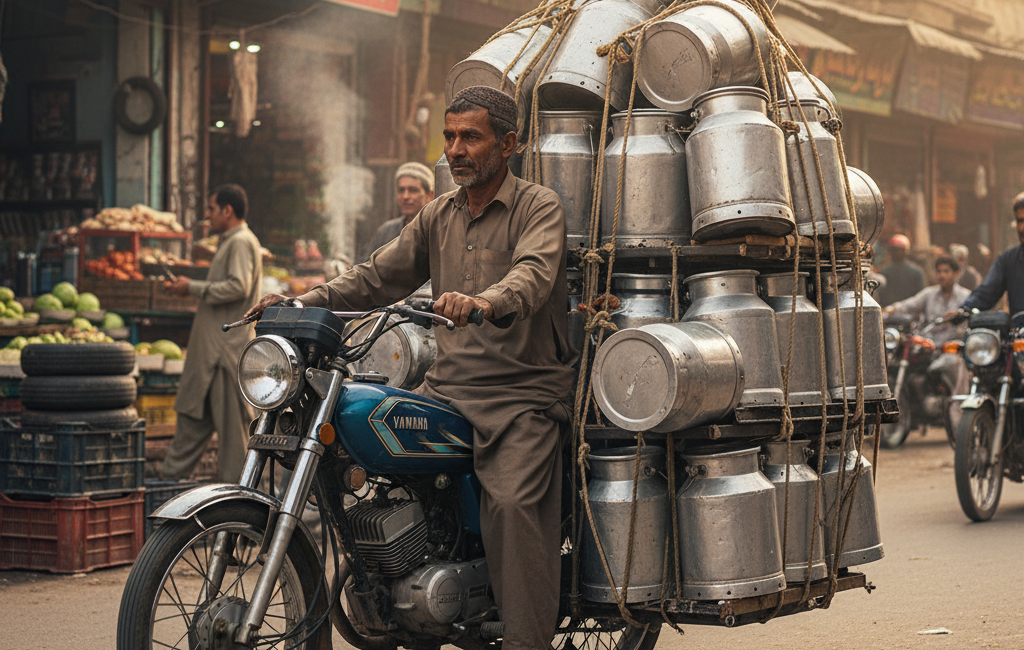
The Enduring Legend of the Doodh Wala Yamaha YB100
In the bustling streets and quiet alleys of Pakistan, there’s a familiar sight and a distinctive sound that has been a part of daily life for decades: the Yamaha YB100, modified to carry a towering load of milk cans. Affectionately known as the “Doodh Wala Yamaha” (Milkman’s Yamaha), this humble two-stroke motorcycle is far more than just a means of transport; it’s a cultural icon, an economic workhorse, and a testament to ingenuity and resilience.
A Legacy Forged in Necessity
The Yamaha YB100, especially the “Royale” variant, arrived in Pakistan and quickly established itself as a robust, reliable, and powerful machine. While popular with everyday riders, it found its true calling as the backbone of the country’s informal milk delivery system.
Imagine the daily routine: collecting fresh milk from farms or wholesalers, often in the early hours, and navigating congested urban environments or rugged rural paths to deliver it to homes and shops. This isn’t a job for just any bike. It demands immense pulling power, unwavering durability, and the ability to handle punishing loads. The YB100 delivered, quite literally.
What Made the YB100 the Undisputed King?
💪 Unmatched Torque and Power: As a two-stroke (2T) engine, the YB100 offered incredible low-end torque and immediate pickup – crucial for hauling hundreds of kilograms of milk cans from a standstill. Four-stroke bikes, while more fuel-efficient, simply couldn’t match its raw grunt when fully loaded.
🏗️ Built Like a Tank: The YB100’s chassis was known for its exceptional strength and durability. The extensive, often custom-fabricated, metal frame used to carry the milk cans puts immense strain on the bike’s structure. The YB100’s robust construction meant it could withstand this daily abuse for years.
💰 Simplicity and Economical Maintenance: Two-stroke engines are mechanically simpler than their four-stroke counterparts. This translated to easier and cheaper repairs, a massive advantage for milkmen whose livelihoods depend on their bike running every single day. Parts were (and still are) readily available and affordable.
🎶 The Signature “Ring-Ding” Sound: Beyond its practical attributes, the YB100’s distinctive two-stroke exhaust note became an auditory cue for generations of Pakistanis. That familiar “ring-ding” sound signaled the arrival of fresh milk, embedding the bike deeply into the daily rhythm of life.
Why is it Still Popular?
Despite the discontinuation of the YB100 and the rise of modern four-stroke motorcycles, the “Doodh Wala Yamaha” phenomenon persists for several compelling reasons:
Existing Fleet and Nostalgia: Thousands of YB100s are still in active service, a testament to their longevity. For many, they are beloved workhorses, passed down through generations.
The “If It Ain’t Broke” Mentality: For the specific, demanding task of milk delivery, many operators still believe the YB100 simply performs better than newer, heavier, or less torquey alternatives, especially when it comes to raw hauling power.
Cost-Effectiveness: For those who already own a YB100, keeping it running is often more economical than investing in a new, more expensive four-stroke bike that may not perform the core job as effectively.
Cultural Icon Status: The image of the milkman on his overloaded YB100 is deeply ingrained in Pakistani culture. It represents hard work, tradition, and a bygone era of motorcycling that continues to capture hearts.
A Symbol of Resilience
The Doodh Wala Yamaha YB100 is more than just a motorcycle with a job; it’s a powerful symbol of small-scale enterprise, adaptation, and the enduring spirit of individuals who keep the wheels of daily life turning. As you hear that familiar two-stroke rumble and spot a heavily laden YB100 skillfully navigating traffic, remember you’re witnessing a living legend on two wheels.
Leave a Comment