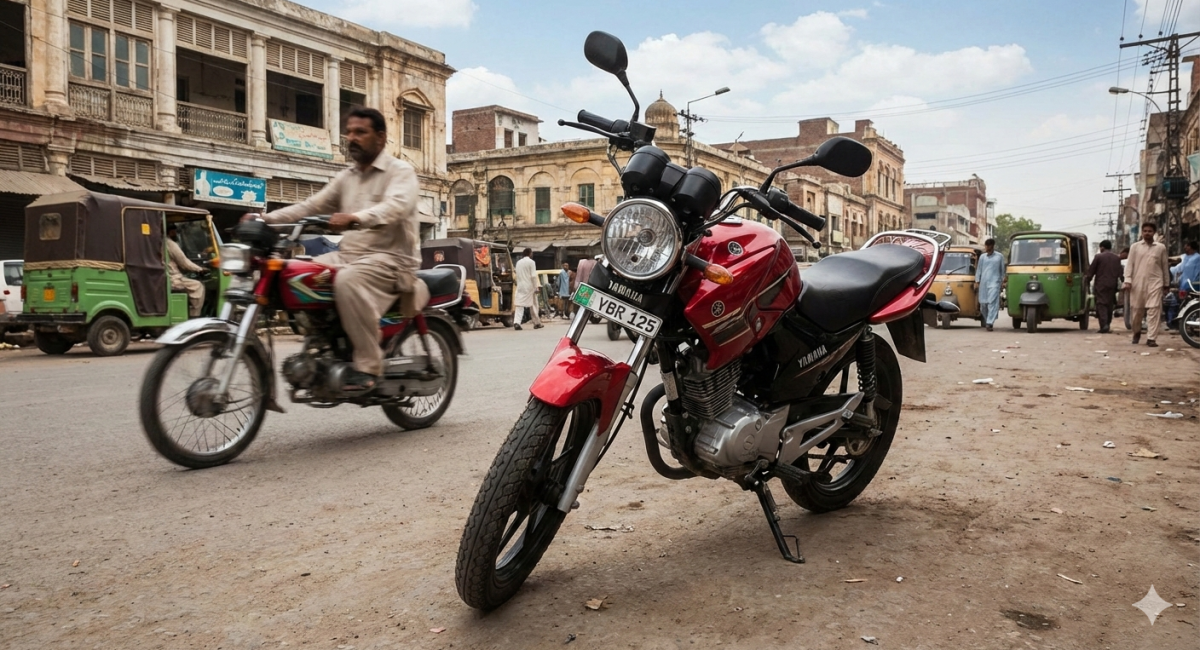
Why Yamaha YBR125 “Failed” in Pakistan: The Rise and Fall of a Modern Icon
When Yamaha re-entered the Pakistani market in 2015, it didn’t just launch a motorcycle; it launched a revolution. The Yamaha YBR125 broke the decades-long “70cc vs 125cc” duopoly of outdated designs. With its sporty looks, alloy rims, and disc brakes, it promised a premium riding experience.
However, by late 2025, news of Yamaha scaling back or exiting local production began to circulate. How did a bike that everyone loved to look at fail to dominate the market? Here is a deep dive into why the Yamaha YBR125 faced such a struggle in Pakistan.
1. The Massive Pricing Gap: YBR125 vs. Honda CG125
Price is the ultimate dealbreaker in the Pakistani motorcycle market. Initially, the YBR was a premium alternative. But as the economy faced inflation and PKR devaluation, the Yamaha YBR125 price in Pakistan skyrocketed, crossing the 4.5 lac mark.
In contrast, the Honda CG125, despite being a decades-old design, remains significantly cheaper. For the average Pakistani buyer, the math is simple: “Why buy one Yamaha when I can almost buy two Hondas?”
2. Innovation Fatigue: The “Sticker Change” Curse
One of the biggest complaints from the Yamaha Pakistan community was the lack of mechanical innovation. For nearly a decade, the YBR125 saw almost no upgrades to its engine or technology.
No 150cc Upgrade: While fans begged for a YS150 or FZ variant, Yamaha stuck to the same 125cc block.
Sticker Updates: Every year, the “new model” was simply the old bike with a new color or graphic. Pakistani consumers, particularly the youth who were Yamaha’s core target, eventually grew tired of paying a premium for 2015 technology in 2025.
3. Power vs. Perception: The Battle for “Pick”
In Pakistan, the “sound” and “pick” (acceleration) of a bike define its success. The Honda CG125 vs Yamaha YBR125 debate is legendary. While the YBR is smoother and more comfortable due to its counterbalancer, it feels “underpowered” to those used to the raw, vibrating thrust of the CG125. On the highways of Punjab or the streets of Karachi, the CG125’s ability to “jump” ahead in traffic won over the masses, leaving the YBR as a niche choice for long-distance tourers only.
4. Maintenance and Spare Parts Crisis
The Yamaha YBR125 fuel average is excellent (often 40-45 km/L), but that saving is offset by maintenance costs. Yamaha genuine parts are significantly more expensive and harder to find in smaller towns compared to Honda’s ubiquitous spare parts network. A broken side indicator or a headlight on a YBR can cost three times more than its equivalent on a Chinese or Honda bike.
5. Failure to Capture the 70cc Market
The 70cc segment accounts for over 80% of the total motorcycle sales in Pakistan. By positioning itself exclusively as a premium 125cc brand, Yamaha missed out on the volume. Without a mass-market “bread and butter” bike to sustain their dealerships, the high-end YBR series couldn’t carry the weight of the entire company’s infrastructure during economic downturns.
Final Verdict
The Yamaha YBR125 didn’t fail because it was a bad bike—it failed because it didn’t adapt to the unique economic realities of Pakistan. It remains the most comfortable 125cc bike in the country, but in a market where “Resale” and “Power” are king, the YBR was eventually outpaced by its simpler, cheaper competitors.
Leave a Comment