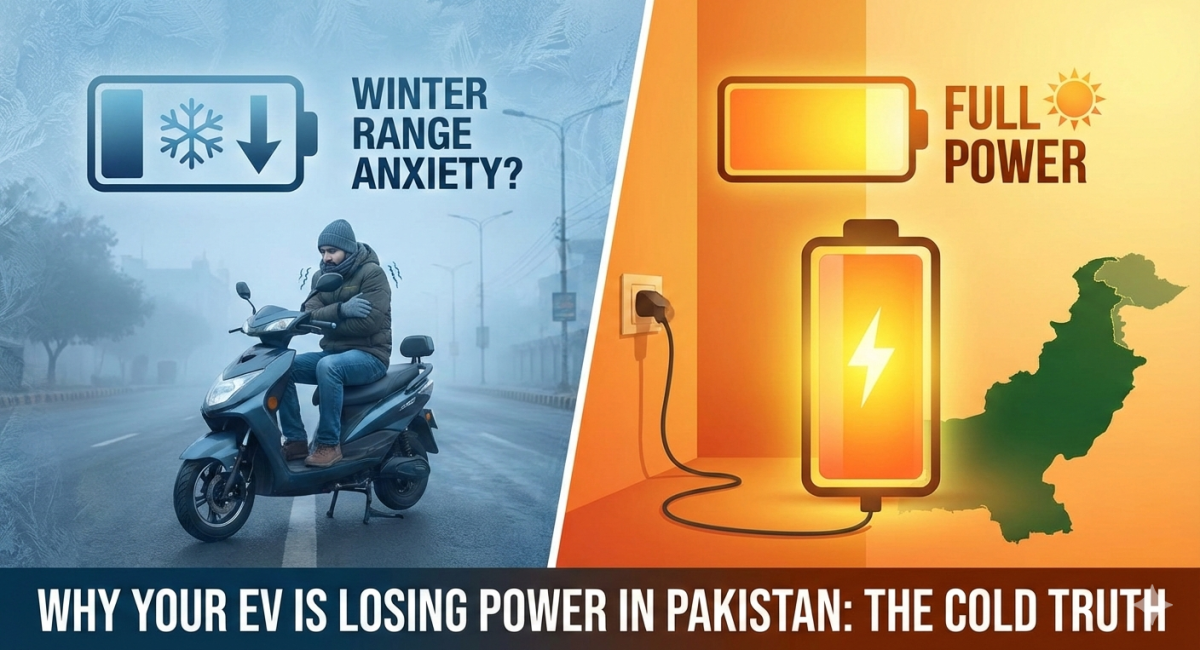
The Winter Dip: Why Pakistani Electric Scooters Lose Range in the Cold
If you’re riding a popular electric scooter in Pakistan from brands like Yadea, Metro, or Eevee, you’ve likely noticed a frustrating drop in performance this winter. Your 80km range suddenly feels like 50km, and the “pick” or acceleration feels sluggish.
While many global articles focus on Lithium-ion batteries, the Pakistani market is unique. Most locally available scooters rely on Dry Lead-Acid (VRLA) or the newer Graphene-coated batteries. While these are cost-effective, they have a “frozen” secret: they hate the winter even more than Lithium does.
The Chemistry: Why Lead-Acid & Graphene “Freeze”
To understand the problem, you have to look inside the battery casing. Whether it is a standard dry battery or a fancy “Graphene” version, the core chemistry is still Lead-Acid.
Electrolyte Sluggishness: Lead-acid batteries use a mixture of sulfuric acid and water. As temperatures drop, this liquid becomes more viscous (thicker). Ions, which carry the electric charge, struggle to swim through this “thick soup.” This slows down the chemical reaction required to power your motor.
Increased Internal Resistance: In the cold, the battery’s internal resistance skyrockets. This means the battery spends a large portion of its own energy just trying to “push” electricity out. In summer, this resistance is low; in a Lahore or Islamabad winter morning, it’s a major energy thief.
The “Graphene” Nuance: Many Pakistani users are told Graphene batteries are “winter-proof.” In reality, Graphene-based batteries in our market are mostly Graphene-infused Lead-Acid batteries. While the graphene coating helps with faster charging and better heat dissipation in the summer, the underlying lead-acid chemistry still suffers significantly from capacity loss in temperatures below 15°C.
Why the “Pick” and Speed Drop
Have you noticed that your scooter feels “heavy” or slow to accelerate in the morning? This is called Voltage Sag.
When you twist the throttle, the motor demands a huge burst of energy. In the cold, the sluggish chemical reaction can’t keep up. The voltage “drops” momentarily, and your scooter’s controller limits the power to protect the battery. On your screen, you might see the battery bar jump from 80% down to 40% under load, only to “recover” once you stop. This instability is a classic symptom of cold lead-acid cells.
The Reality in Pakistan
Pakistani EV users face a “triple threat” in winter:
No Thermal Management: Unlike high-end electric cars, local scooters have no built-in heaters to keep the battery warm.
Overnight Cold Soaking: Most users park their bikes in open porches or uninsulated garages. This “soaks” the battery in 5°C–8°C temperatures all night, ensuring it starts the day in its most inefficient state.
Under-inflated Tyres: Cold air is denser, meaning your tyre pressure drops naturally in winter. Low pressure creates more friction on the road, forcing the already struggling battery to work even harder.
How to Save Your Range: Practical Tips
You can’t change physics, but you can optimize your ride:
The “Indoor” Advantage: If your battery is removable, bring it inside the house at night. Storing it at room temperature (20°C) can give you 20–30% more range compared to a battery left in the cold.
Charge Before You Ride: Try to time your charging so it finishes just before you leave. Charging generates internal heat, “waking up” the chemistry and reducing internal resistance for your commute.
The 5-Minute “Warm Up”: Ride at a very slow, steady speed for the first kilometer. This gentle draw of current helps the battery warm itself up internally before you hit high speeds.
Check PSI Weekly: Keep your tyres slightly on the higher side of the recommended limit to reduce rolling resistance.
Summary
The range drop you are seeing isn’t necessarily a sign of a “dead” battery; it’s a seasonal characteristic of Lead-Acid and Graphene technology. While Lithium-ion users lose about 15% range in winter, Lead-Acid users can see drops of 30% to 40%.
Leave a Comment