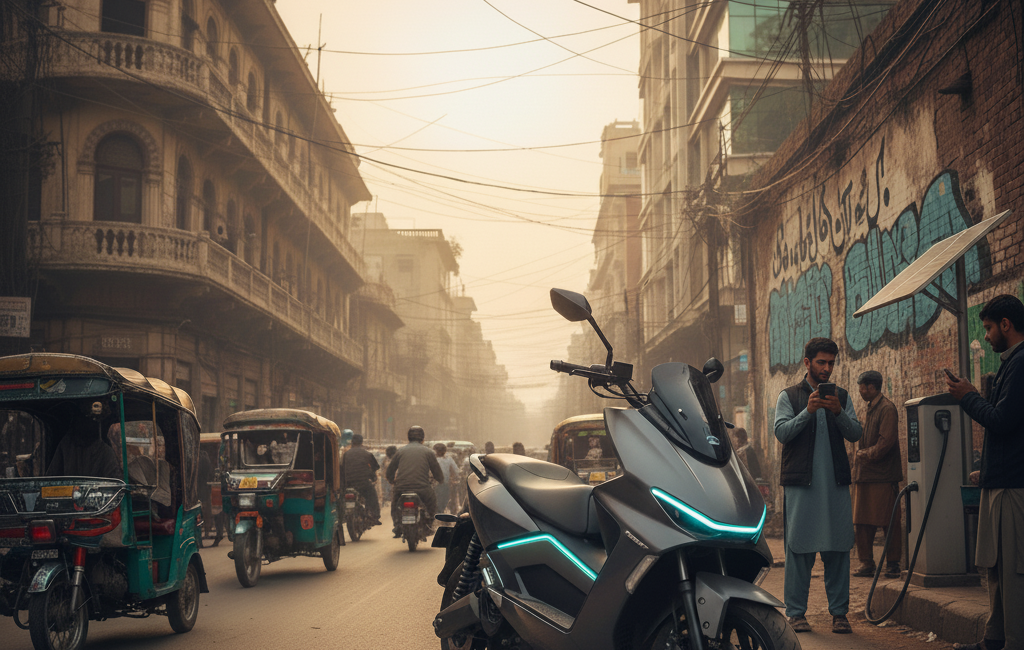
Can Electric Bikes Replace Petrol Bikes in Pakistan? A Realistic Analysis
Electric bikes (e-bikes) are gaining attention in Pakistan, especially with rising petrol prices and growing interest in environmentally friendly transport. But the big question remains: Can electric bikes realistically replace petrol bikes in Pakistan? The answer is not simple. While e-bikes have potential, Pakistan still faces major challenges related to electricity cost, charging infrastructure, technology, and user acceptance.
1. High Cost of Electricity
One of the strongest arguments against the rapid adoption of e-bikes is Pakistan’s high electricity cost. As electricity tariffs continue to increase, charging a lithium battery has become almost as expensive as a tank of petrol—sometimes even more.
For an electric bike to be economical, the cost per kilometer must remain significantly lower than petrol bikes. But with high unit rates, especially during peak hours, the cost advantage is shrinking. Riders who don’t have access to off-peak charging or solar setups feel that the savings are not enough to justify the switch.
2. Difficulty in Charging at Home
Charging an e-bike at home sounds simple—but for many Pakistanis, it isn’t. Majority of households have:
Constant load shedding,
Low-voltage issues,
Limited secure parking space to keep the bike plugged in safely,
Small apartments or rented rooms where installing a charging point is not possible.
If your bike needs 6–8 hours for a full charge, one long outage can ruin your entire day’s plan. Petrol bikes, on the other hand, take 2 minutes to refuel.
3. Lack of Charging Stations & Swap Networks
Countries like China and Taiwan have strong charging and battery-swapping networks. Pakistan, however, is far behind.
Only a handful of brands have started testing swapping stations, but none have built a fully functional, large-scale network. Without:
Public charging points,
Fast chargers,
Safe battery swap kiosks,
e-bike riders face “range anxiety.” If the battery runs low outside the home, there is almost nowhere to charge.
4. Lack of Technology & Local Manufacturing
Electric bike technology in Pakistan is still in its early stages. Many local companies rely on imported Chinese kits, motors, and controllers. The challenges include:
Battery quality issues
Motor reliability problems
Weak after-sales service
No local R&D
No large-scale production
Incidents like motor jamming, faulty controllers, and poor-quality batteries damage public trust. Until Pakistan develops strong manufacturing standards, people will hesitate to adopt electric bikes for daily commuting.
5. Acceptance & Trust Issues
Pakistani bikers are practical. They want:
Long engine life
Easy spare parts
Quick repairs
Durability on rough roads
Reliability in all weather
Petrol bikes fulfill all these needs. Electric bikes, so far, are still proving themselves. Many riders still see e-bikes as experimental, not dependable.
Conclusion: Replacement Is Possible, but Not Soon
Electric bikes can replace petrol bikes—but not yet. Pakistan needs:
Affordable electricity,
Stable charging at home,
Public charging/swap networks,
Better technology and quality,
Strong government policies,
Improved user trust.
Until then, e-bikes will remain a niche category, not a mainstream replacement.
Electric bikes are the future—just not the present.
2 Comments